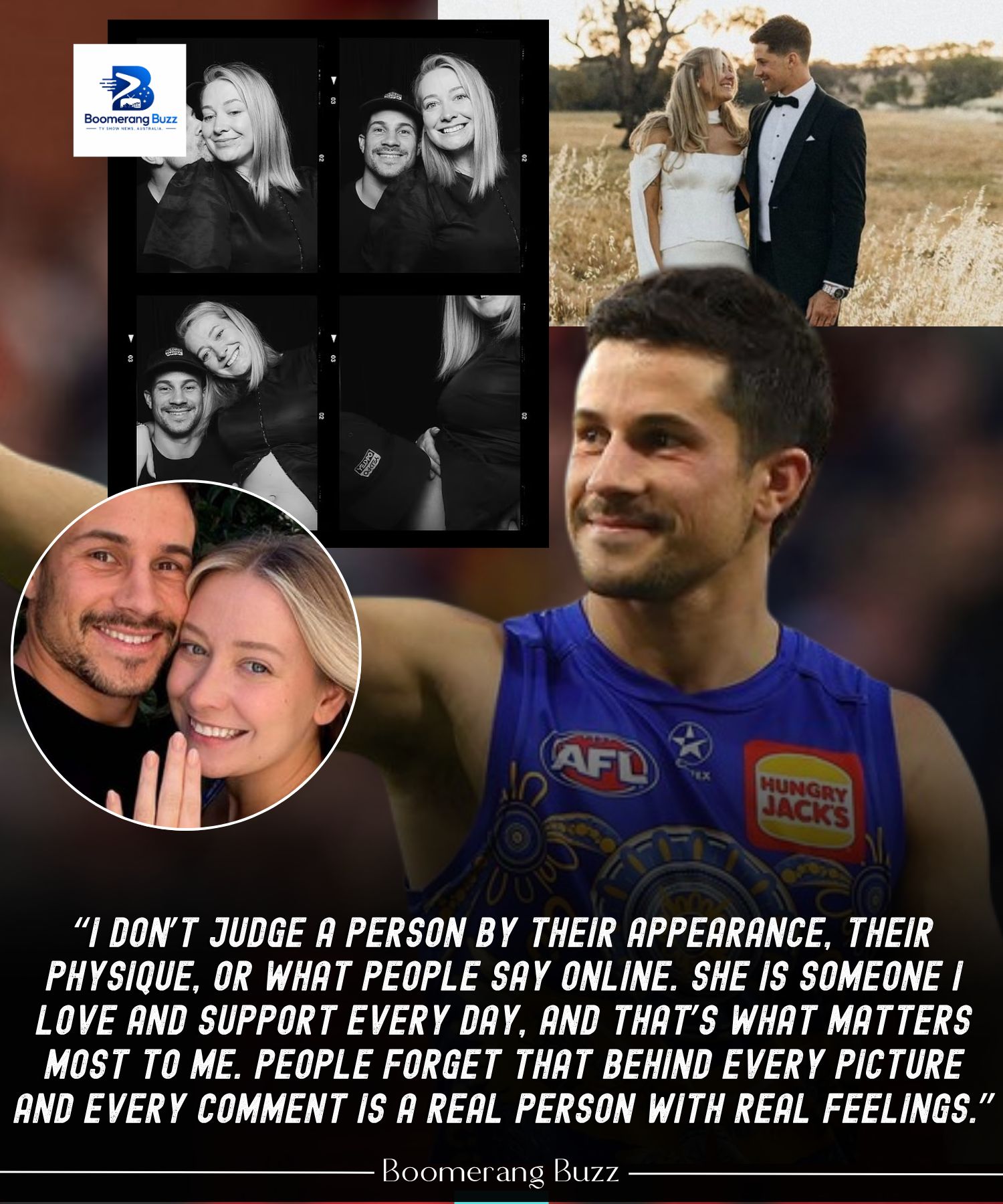
West Coast Eagles defender and vice-captain Liam Duggan has become the centre of an emotional online discussion after speaking out against cruel social media comments aimed at his wife’s appearance.
What began as a wave of unnecessary and hurtful remarks quickly turned into a broader conversation about body shaming online behaviour and the human cost of careless words.
Duggan known for his toughness and leadership on the AFL field reportedly responded with calm but powerful words after seeing comments directed at the woman he loves.
Rather than reacting with anger or bitterness he chose to defend his wife with dignity reminding fans that behind every public image is a real person with real feelings.
“I don’t judge someone based on appearance body shape or what people say online” Duggan was quoted as saying.
“She is the person I love and support every day, and that is what matters most to me.
People forget that behind every photo and every comment is a real human being with real emotions.”
His response quickly drew attention across social media platforms where thousands of supporters praised him for standing up not only for his wife but also for kindness and basic respect.
Many fans described his words as mature, class, and “a reminder that athletes are human beings too.”

For public figures scrutiny is often seen as part of life in the spotlight.
AFL players are used to criticism of their performances, decisions and leadership.
But Duggan’s message highlighted a different issue, the way social media users sometimes target the families and loved ones of athletes, dragging private individuals into public conversations they never asked to be part of.
In this case the comments were not about football.
They were not about the West Coast Eagles form, Duggan’s defensive work or anything connected to the game.
They were personal attacks on someone close to him.
That distinction is what made the situation so troubling for many fans.
Supporters quickly rallied behind Duggan and his wife, flooding online discussions with messages of encouragement.
Some fans said the incident showed why social media platforms need stronger standards against body shaming and harassment.
Others argued that people should think more carefully before posting comments they would never say face to face.
One supporter wrote that Duggan’s response showed “real leadership beyond football.”
Another said his words were important because they reminded people that kindness should not disappear simply because someone is connected to a famous athlete.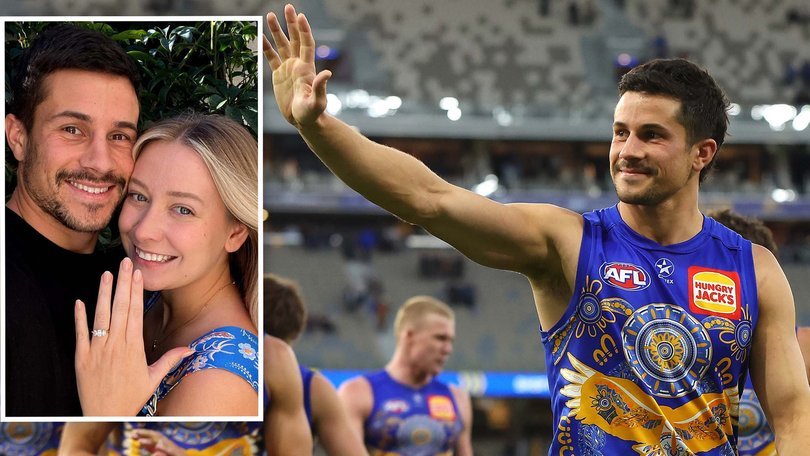
The emotional reaction also reflected the deep connection many fans feel with players.
While athletes are often celebrated for their strength, speed, discipline and courage, moments like this reveal a more personal side.
Duggan was not speaking as a vice-captain or a professional footballer.
He was speaking as a husband who saw someone he loves being hurt.
That honesty appeared to resonate strongly with the public.
The issue of online cruelty has become increasingly visible in sport.
Players, partners, families, coaches and even young fans are regularly exposed to harsh comments from strangers.
While criticism has always existed in competitive sport, social media has made it faster, louder and more personal.
A single post can attract thousands of reactions within minutes and the damage caused by hurtful words can last far longer than the attention surrounding them.
Duggan’s response did not attempt to shame people back, instead it asked for empathy.
It reminded people that beauty, worth and love cannot be measured by online approval.
It also challenged the idea that being in the public eye means accepting abuse without complaint.
For many that was the most powerful part of his message.
He did not simply defend his wife’s appearance.
He rejected the idea that appearance should be the basis for judgment at all.
In doing so he turned a painful personal moment into a public reminder about compassion.
As the discussion continued to spread, fans from beyond the West Coast Eagles community joined in.
Even those who do not follow the club closely, praised Duggan for responding with grace under pressure.
Some said they hoped more athletes would speak openly against toxic online behaviour especially when it affects families and partners.
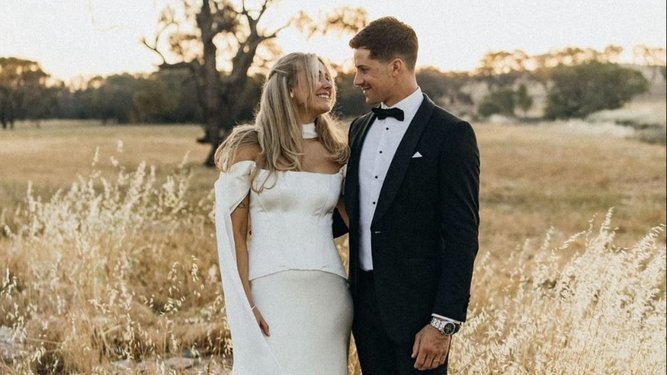
The West Coast Eagles defender has long been respected for his commitment on the field but this moment showed another kind of strength.
It showed emotional courage, loyalty, and the willingness to use his platform for something bigger than sport.
In the end the story became about more than one player and one hurtful episode.
It became a reminder that words matter.
Online comments may be typed quickly and forgotten by the person who posts them but they can deeply affect the person on the receiving end.
Liam Duggan’s message was simple but it carried weight; respect should not depend on fame, appearance or public opinion.
Everyone deserves to be treated with humanity.
And in a world where cruelty can spread so easily, his response offered something far more powerful — dignity, love and a call for people to do better.